Image Nano Banana Pro
Gourmet Geology: A Delicious Cross-Section
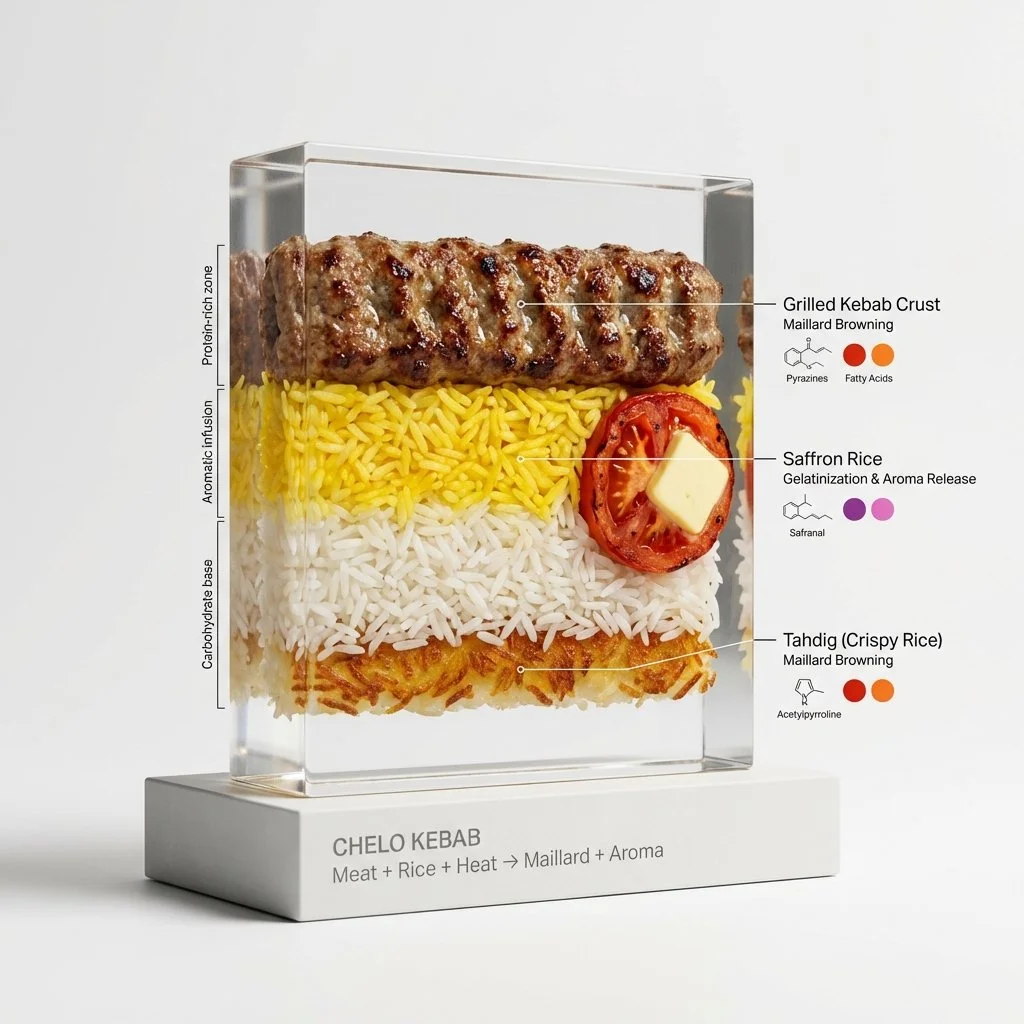
Uncover the layered art of cuisine through crystal clarity, showcasing each flavor's journey in a stunning, museum-worthy acrylic display.
Prompt
Copied. Make it your own here.
Prompt prefilled · Suggested: Nano Banana 2 · 4 credits/image
<instruction>
do this for a layered dish (lasagna, tiramisu, banh mi, club sandwich, etc.) (Input A).

Input A: Analyze the dish as stacked layers. Identify physical structure (bread, sauces, proteins), textures, and key reactions within each layer (gelatinization, fat melting, Maillard crust, etc.), plus major flavor molecules.

Input B (optional): style reference (geology core sample / Scandinavian design). If missing, choose “geological specimen + high-end design boutique object.”

Goal: A crystal-clear acrylic or resin block containing a perfectly preserved vertical cross-section of the dish like a geological core, with precise chemical annotations.

Rules:

Block size: approx. 6"x8"x2" clear acrylic, edges beveled, standing upright on a minimal plinth.

Inside: clean vertical slice of the dish, every layer visible in hyper-real detail, slightly magnified.

Thin white hairline lines extend from each distinct layer to minimal labels printed on the outside surface of the block:

Layer name (e.g., “Toasted Bread Crust”)

Dominant reaction (e.g., “Maillard Browning”)

Key flavor molecules with tiny skeletal formulas.

Use tiny circular color chips next to each label to indicate: umami red, sweet pink, sour yellow, bitter green, fat orange, aromatic purple.

Include a vertical scale on one side like a geological depth legend, with marks and text such as “Carbohydrate-rich layer,” “Fat reservoir,” “Moisture gradient.”

Base plinth: matte white or brushed aluminum, with laser-etched dish name and a small equation-like summary (e.g., “Starch + Heat → Dextrins + Aroma”).

Background: seamless soft white sweep, faint shadow beneath the block, giving it a museum-specimen feel.

Typography: ultraclean sans-serif, micro-typography feel, like technical labeling on instruments.

Output: ONE image, 4:5 aspect ratio, high-end product shot focused on the resin block, shallow depth of field, ultra-crisp details on the labels and food layers.
</instruction>
Published: January 22, 2026 by @Gdgtify