Image Nano Banana Pro
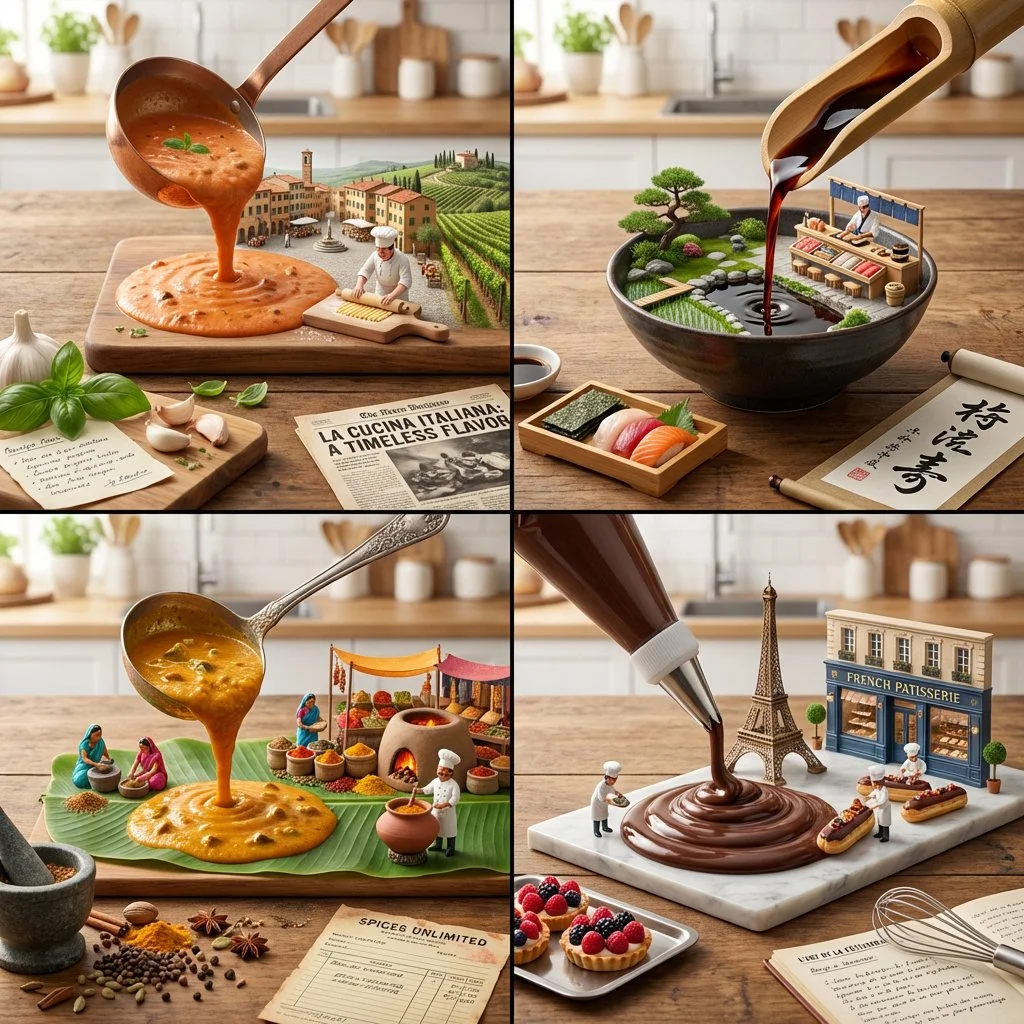
Culinary Worlds in Sauce: Four Iconic Dishes Reimagined as Edible Dioramas
Explore four famous dishes transformed into detailed 3D worlds where sauces pour to reveal their ingredient layers, cooking rituals, and cultural origins in a 2x2 grid format.
Prompt
2x2 grid, do this for 4 famous cuisines: function dish(AA){
<instruction>
Input A is a Famous Dish / Culinary Tradition / Signature Dessert / Regional Specialty.

Analyze:
- ingredient hierarchy, cooking method, plating logic
- origin region, historical story, ritual or social context
- flavor architecture translated into visual composition
- symbolic ingredients, cookware, and dining environment
- chef or tradition lineage

Goal:
A "sauce pour environment."
A giant ladle, piping bag, or sauce boat is pouring the primary sauce, cream, glaze, broth, or puree onto a table.
The flowing edible medium rises into a detailed 3D world of the dish: ingredients, preparation stages, origin landscape, and plated final form merging together.

Rules:
- the poured substance must remain recognizably edible while forming the scene
- include knives, cutting board, handwritten recipe notes, ingredient trays, steam, spice dust, region-appropriate tools
- include a tiny chef or grandmother figure preparing a miniature version nearby
- include a food critic headline, market receipt, or origin-story clipping
- semantically infer cuisine-specific vessels, table culture, garnish logic, and environment
- no random food pile; composition must reveal flavor structure and culinary history
- lighting: appetizing natural kitchen light with rich edible texture

Output:
ONE image, 4:5, culinary-process diorama aesthetic
</instruction>

Output:
2x2 grid, each grid with a different dish(AA) output
}
Published: April 11, 2026 by @Gdgtify