Image Nano Banana Pro
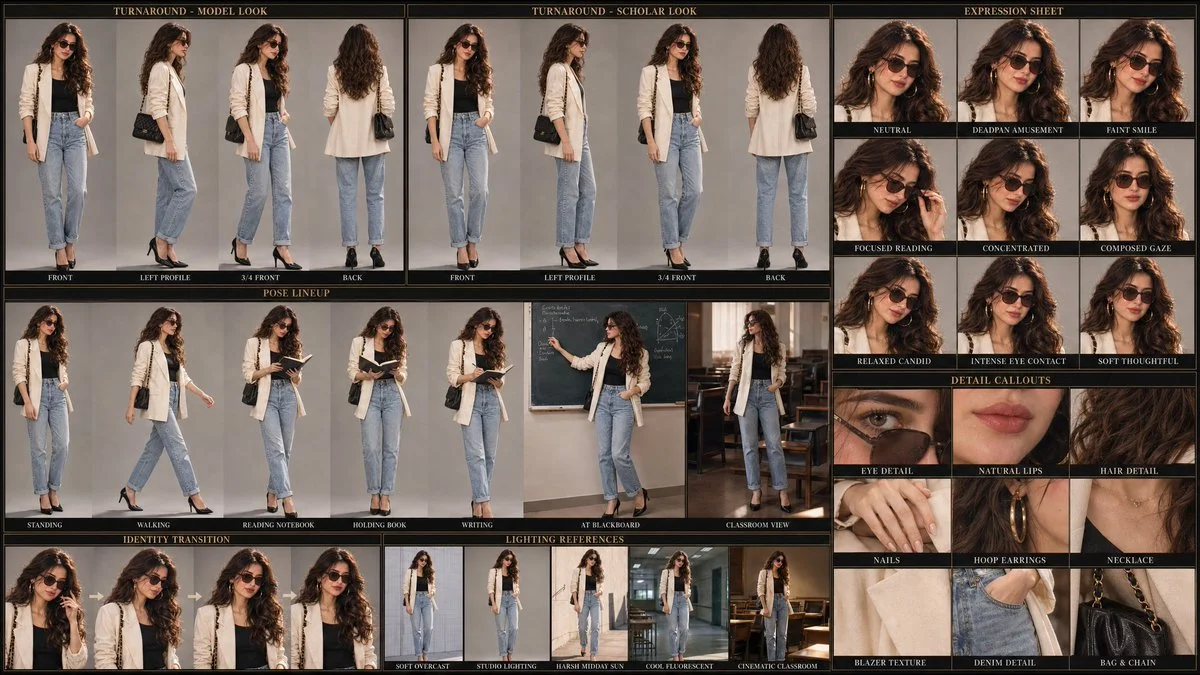
Cinematic Character Sheet Locks Model's Exact Outfit in Four Views
Professional turnaround sheet preserves facial identity and wardrobe details from reference image across front, profile, and back panels.
Prompt
REFERENCE IMAGE 1 = MODEL IDENTITY + OUTFIT REFERENCE
REFERENCE IMAGE 2 = CHARACTER SHEET / LAYOUT REFERENCE
Create an exactly structured professional cinematic character development sheet based on Reference Image 2, but completely replace the original woman with the female model from Reference Image 1.

HIGHEST PRIORITY — IDENTITY & OUTFIT LOCK

Use Reference Image 1 as the strict identity and wardrobe reference for the model. Preserve her exact recognizable facial identity, facial proportions, eyes, eyebrows, nose, lips, jawline, cheekbones, skin tone, skin texture, hair color, hair texture, hairstyle, distinctive hair details, body proportions, and overall natural appearance.

MOST IMPORTANT — EXACT OUTFIT TRANSFER:
The female model must wear the EXACT same outfit/dress shown on the woman in Reference Image 1. Transfer the clothing from Reference Image 1 onto the character-sheet model without redesigning, replacing, restyling, recoloring, simplifying, or changing it. Preserve the exact garment type, color, fabric, material, texture, pattern, print, neckline, sleeves, length, silhouette, fit, seams, buttons, accessories, footwear, and all other visible wardrobe details from Reference Image 1.

Reference Image 2 is used ONLY for the character-sheet composition, layout, panel structure, poses, camera angles, spacing, labels, and presentation style. Do NOT copy the clothing of the woman from Reference Image 2.
The wardrobe from Reference Image 1 has higher priority than any clothing shown in Reference Image 2. If Reference Image 2 shows a different outfit, completely ignore that outfit and use the outfit from Reference Image 1 instead.

Maintain the same exact outfit consistently across every relevant full-body, turnaround, pose, silhouette, lighting, and transition panel. The clothing must remain visually identical throughout the entire character sheet, with physically accurate fabric behavior and consistent construction.

IDENTITY CONSISTENCY:
Every portrait, full-body panel, pose, turnaround, silhouette, expression, lighting reference, and detail panel must clearly depict the SAME woman from Reference Image 1. Do not redesign, beautify, age, masculinize, or alter her face.

MATCH REFERENCE SHEET EXACTLY

Recreate the same overall character-sheet composition, grid structure, panel arrangement, visual hierarchy, framing, spacing, labels, camera angles, studio presentation and professional concept-art aesthetic seen in Reference Image 2.
Create a large professional character sheet containing:

TURNAROUND — MODEL LOOK
Four full-body views of the model:
front view
left profile
3/4 front view
back view

Use the EXACT outfit from Reference Image 1 in every turnaround view. Preserve every visible clothing and accessory detail from Reference Image 1.

TURNAROUND — SCHOLAR LOOK
Four full-body views:
front
side
3/4
back

For this section, maintain the same character identity while adapting the outfit only if a distinct second wardrobe is clearly required by the visual structure of Reference Image 2. If Reference Image 1 provides only one outfit, use the Reference Image 1 outfit consistently instead of inventing a new wardrobe.
POSE LINEUP
Multiple full-body poses showing the same model:
standing naturally
walking
reading a notebook
holding an open book
writing
standing beside a classroom chalkboard
looking toward a lecture/classroom environment
Keep her body proportions, face, hairstyle, wardrobe identity, and overall appearance consistent in every panel.
EXPRESSION SHEET
Create multiple close-up head-and-shoulder portraits of the same model showing:
neutral
deadpan amusement
faint smile
focused reading
concentrated expression
composed runway gaze
relaxed candid
intense eye contact
Expressions should change naturally while the face identity remains identical.
IDENTITY TRANSITION
Show the model transitioning visually between the character appearances represented in the reference sheet while keeping the SAME woman from Reference Image 1.

If multiple wardrobe variations are required, preserve the exact wardrobe logic established by Reference Image 1 and do not invent unrelated clothing.

LIGHTING REFERENCES
Create several full-body/portrait examples of the same model under:
soft overcast daylight
studio lighting
harsh midday sunlight
cool fluorescent hallway lighting
cinematic classroom lighting
Keep the exact model identity and wardrobe consistent.
DETAIL CALLOUTS
Include realistic close-up panels for the visible characteristics and wardrobe details from Reference Image 1, including where applicable:
eye detail
natural lips
individual hair strands and distinctive hair details
manicured nails
jewelry/ac
Published: September 12, 2026 by M. Asif