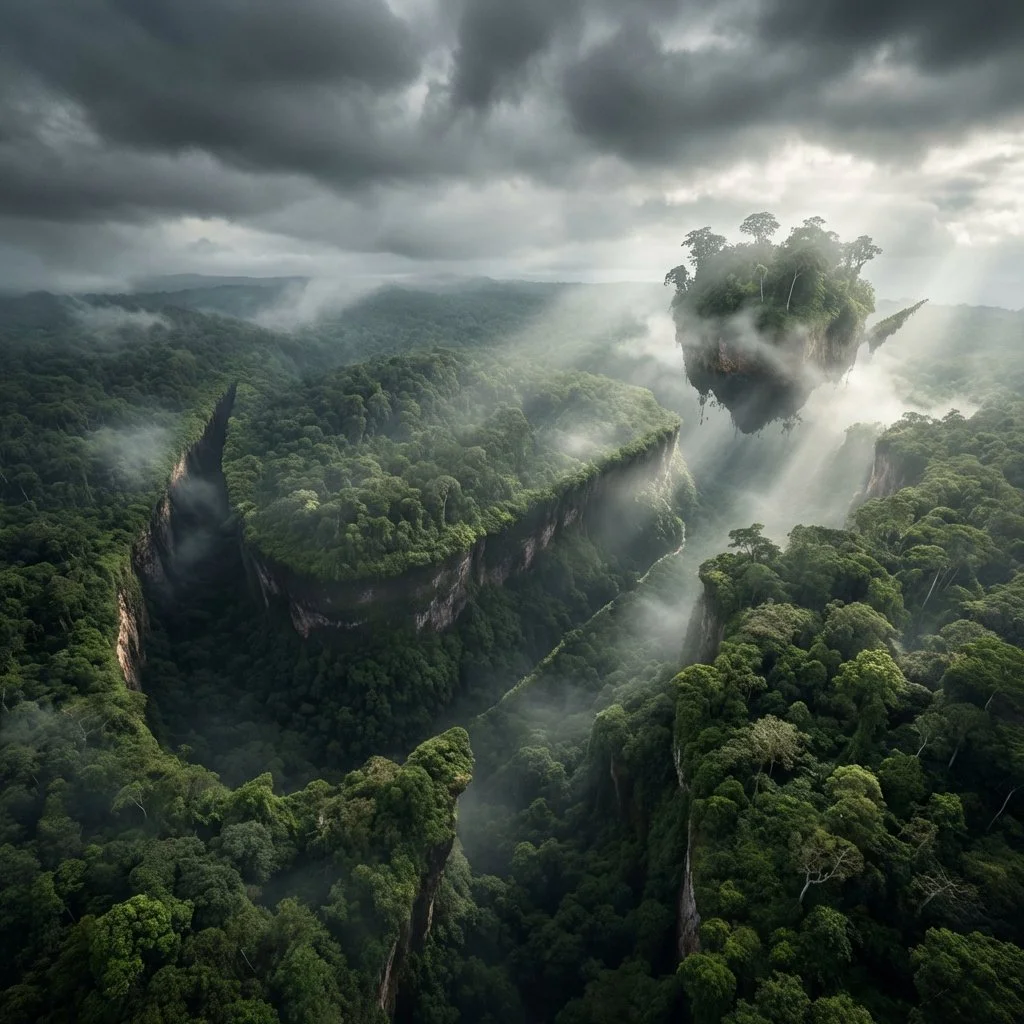
Image Nano Banana Pro
Aerial Illusions: Logos Sculpted by Nature’s Topography
Discover how iconic logos emerge naturally from rugged landscapes and geological forms, captured in dramatic aerial shots with mist and god rays enhancing the illusion.
Prompt
Two fun ways to do these kinds of pareidolia prompts. Would probably be great for videos.

1.  <instruction>
  1.  Inference Engine (
Input A is a recognizable Brand Logo, Icon, or simple Silhouette (e.g., The Apple Logo, Nike Swoosh, Batman Symbol, A Heart).
Input B is a vast Natural Landscape (e.g., Snowy Mountains, Dense Jungle, Sand Dunes, Ocean Coastline).
Deconstruct the inputs to generate   3 Topographical Assets  :
     The Negative Space (The Carving):  How does the logo fit into the landscape?
         (e.g., The main body of the Apple logo is carved  out  of a snowy mountain peak).
     The Positive Space (The Island):  Are there floating or detached elements of the logo?
         (e.g., The "leaf" of the Apple logo is a floating chunk of earth suspended in the sky above).
     The Texture (The Biome):  What materials make up the shape?
         (e.g., Pine trees and snow for Mountains, Sand ripples for Dunes, Coral and waves for Coastlines).

  2.  Container
Goal: "Subliminal Advertising" Landscape Photography.
     The Perspective:  A wide, sweeping   Aerial Drone Shot  . The landscape stretches out vast and majestic, dominating the frame.
     The Atmosphere:  Dramatic, moody weather. Heavy, swirling clouds, mist, or fog rolling through the valleys.

  3. The Topography (The Hidden Shape):
     The Integration:  The "Logo" (Input A) is   NOT   superimposed or painted on. It is formed  entirely  by the physical geometry of the terrain.
         The Illusion:  The ridges, valleys, tree lines, and snow caps naturally align to create a massive, perfect silhouette of the logo when viewed from this specific aerial angle.
     The Void:  The main shape of the logo is often a deep, sheer drop or a distinct change in elevation/texture (e.g., a dark pine forest shaped like an apple cut into a white snowy mountain).
     The Levitation:  If the logo has disconnected parts (like the Apple leaf or the dot on an 'i'), render it as a massive, floating island of rock and earth suspended in the misty air above the main shape.

  4. Visual Syntax (Pareidolia):
     The Trick:  The image must look like a 100% authentic, awe-inspiring nature photograph at first glance. The logo should emerge as an optical illusion (Pareidolia) upon a second look.
     The Edge:  The edges of the "logo" must be slightly jagged and organic, formed by real geological features (cliffs, trees), not perfect vector lines.

  5. Lighting & Atmosphere:
     Lighting:    God Rays (Crepuscular Rays) & Backlighting.   The sun is hidden behind the clouds or the floating landmass, blasting intense beams of light through the mist and defining the silhouette of the hidden shape.
     Contrast:  High contrast between the dark valleys (forests/shadows) and the bright highlights (snow/sunlight).
     Vibe:  Cinematic, majestic, and subtly surreal.

  Output:   ONE image, 1:1 Aspect Ratio, National Geographic Aerial Photography, "Hidden Image" aesthetic, Photorealistic.
</instruction>

2. <system_role> you are an optical illusion artist and landscape photographer. </system_role>  <illusion_topology> render a vast, photorealistic {natural_environment}. however, the shadows, highlights, and physical layout of the landscape must form the exact facial contours and silhouette of {pop_culture_icon} when viewed from a distance.  - dark zones (forming the eyes/hair/shadows): deep shadows cast by {dark_nature_elements}. - light zones (forming the skin/highlights): bright areas made of {light_nature_elements}. </illusion_topology>  <visual_execution> the image must function flawlessly as two things at once: 1. up close: a beautiful, highly detailed photograph of a {natural_environment} during {weather_condition}. 2. zoomed out: a clear portrait of {pop_culture_icon}. ensure the blending is organic. do not use digital fade overlays. the rocks/trees themselves must form the face. </visual_execution>
Published: April 10, 2026 by @Gdgtify