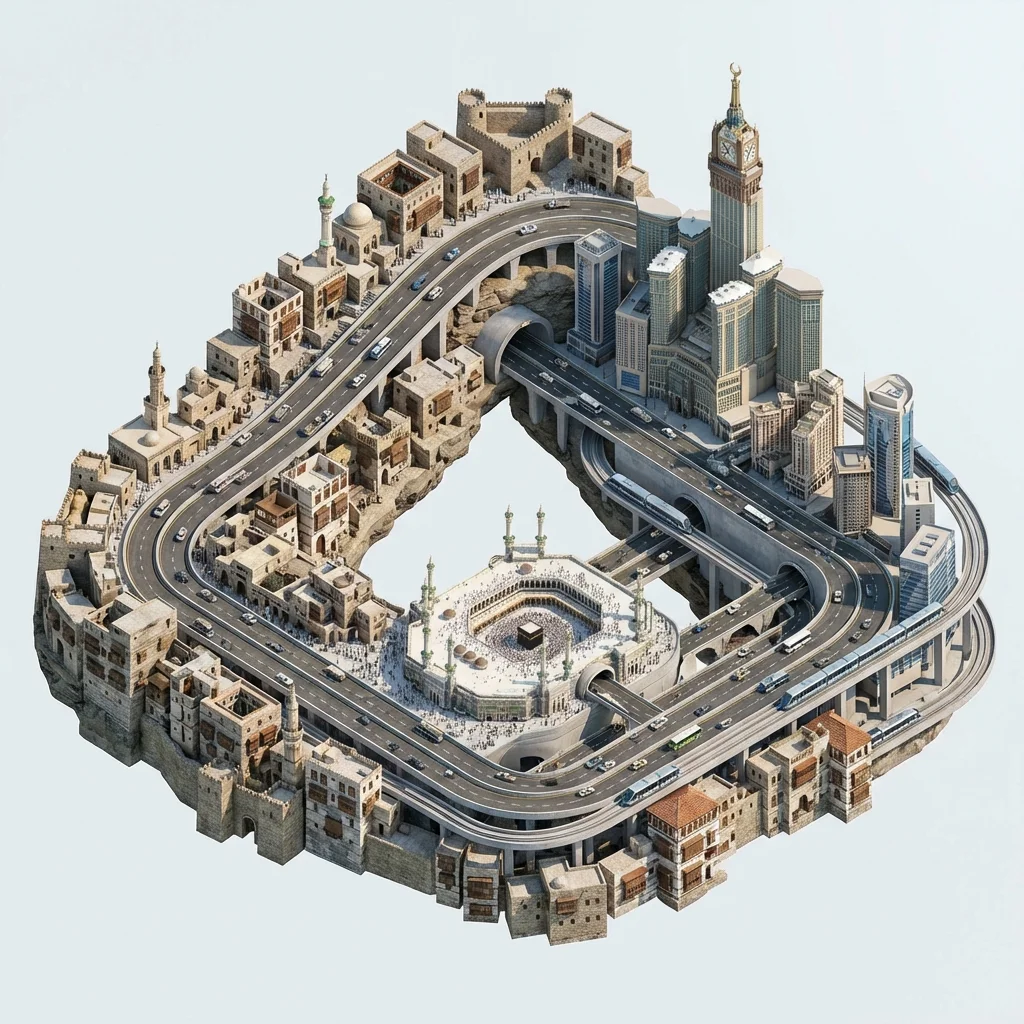
Image Nano Banana Pro
Urban Paradox: Timeless Meets Contemporary
Explore a surreal cityscape where historic architecture collides with modern design in an impossible floating structure, showcasing urban diversity and dynamic life.
Prompt
<instruction>   Do this for [City / Region / Urban Identity / Place with Old-and-New Character]:
1.  Inference Engine  :
Input A is a city, metropolitan region, historic district, or culturally layered urban place.
Analyze Input A and infer 5 Urban Components:
The Historic Fabric: identify the older architectural language of Input A — colonial blocks, classical facades, temple roofs, stone alleys, courtyard houses, warehouses, arcades, low-rise heritage streets, or traditional neighborhoods.
The Modern Skyline: identify the contemporary architectural language — glass towers, financial high-rises, broadcast spires, elevated transit, supertalls, dense commercial cores, or futuristic infrastructure.
The Street Life Layer: infer the roads, tram lines, cars, pedestrians, rail systems, signage, and circulation patterns that make the city recognizable.
The Material Contrast: determine the key visual contrast between old and new — masonry vs glass, tiled roofs vs steel, narrow lanes vs multilane avenues, ornament vs minimalism.
The Icon Balance: infer which landmarks, building types, and skyline elements best symbolize Input A without overcrowding the composition.
2.  Container (The Impossible Urban Loop):
Goal: a surreal Escher-like architectural paradox sculpture.
Construct the city as a giant impossible triangular / Penrose-style elevated road structure floating in empty space:
the structure forms a continuous impossible loop
each side of the loop functions like a real urban street or boulevard
the top surfaces carry roads, rail lines, and city blocks
the inner void remains open, emphasizing the impossible geometry
the entire object feels like a floating city-model sculpture
3. The Urban Construction (Old Meets New on a Paradox):
Distribute the inferred city identity across the impossible structure:
one side emphasizes the historic fabric
one side emphasizes the modern skyline
one side blends everyday neighborhood life, transit, and connective urban tissue
the central lower platform or inner segment contains a compact district that acts as the cultural “heart” of the city
roads must wrap naturally around the impossible geometry, with cars, trams, lane markings, rails, and intersections reinforcing realism
4. No Hardcoding Constraint:
Do not assume any specific skyline, landmark, tram system, or architectural style by default.
Instead:
infer the correct historic and modern forms from Input A
if Input A is highly historic, weight the composition toward heritage massing
if Input A is highly futuristic, weight toward sleek towers and infrastructure
if Input A is mixed, maximize contrast between preserved urban fabric and modern development
the impossible structure must adapt to any city or region, not a fixed example
5. Visual Syntax & Atmosphere:
Camera: elevated 3/4 isometric view, like a premium architectural maquette render
Lens feel: tilt-shift / aerial model photography
Lighting: clean daylight with crisp shadow definition
Background: seamless pale sky or minimal neutral void, no ground plane
Aesthetic: architectural visualization meets surreal geometry meets luxury city model
Detail: ultra-sharp roads, lane paint, vehicles, rails, facades, windows, roof textures, stone retaining walls, skyline silhouettes
6. Scale & Readability Rules:
the impossible loop must be instantly legible as a paradox object
the city details must remain recognizable at miniature scale
architecture should feel dense but organized
transit and traffic should help sell the realism of the urban model
preserve a strong contrast between monumental geometry and fine-grained street detail
Output: ONE image, square or landscape aspect ratio, ultra-detailed impossible city sculpture for Input A, built on a floating Penrose-style road loop, with AI-inferred historic and modern urban identity, realistic transit detail, clean daylight rendering, and no hardcoded city specifics.
</instruction>
Published: March 18, 2026 by @Gdgtify